2+2🇨🇦 CanadaUIBE

Canada 2+2 International Undergraduate Program

UIBE Commissioned Training · In Partnership with Alexander College, Canada

Program Overview

About This Program

Jointly delivered by UIBE and Alexander College (AC), Canada, this 2+2 commissioned-training program features AC faculty teaching the domestic phase in English, with credits recognized by the British Columbia Council on Admissions and Transfer (BCCAT). Students articulate directly into the junior year at UBC, U of Toronto, SFU, and other Canadian universities — without a community-college intermediary. The program supports students from preparation through credit earning and transfer application.

Understanding the "2+2" Model

The "streamlined 2+2 pathway" is central to the program's design: two domestic years are delivered by AC faculty with curricula aligned with Canadian university standards; credits are recognized through British Columbia's legal transfer framework; students articulate directly into the junior year at target universities — bypassing the community-college detour. Historically, 95%+ of program students have transferred into B.C.'s top-3 universities.

Partner Institutions

Domestic Host & Overseas Partner

University of International Business and Economics (UIBE)
Domestic Host

University of International Business and Economics (UIBE)

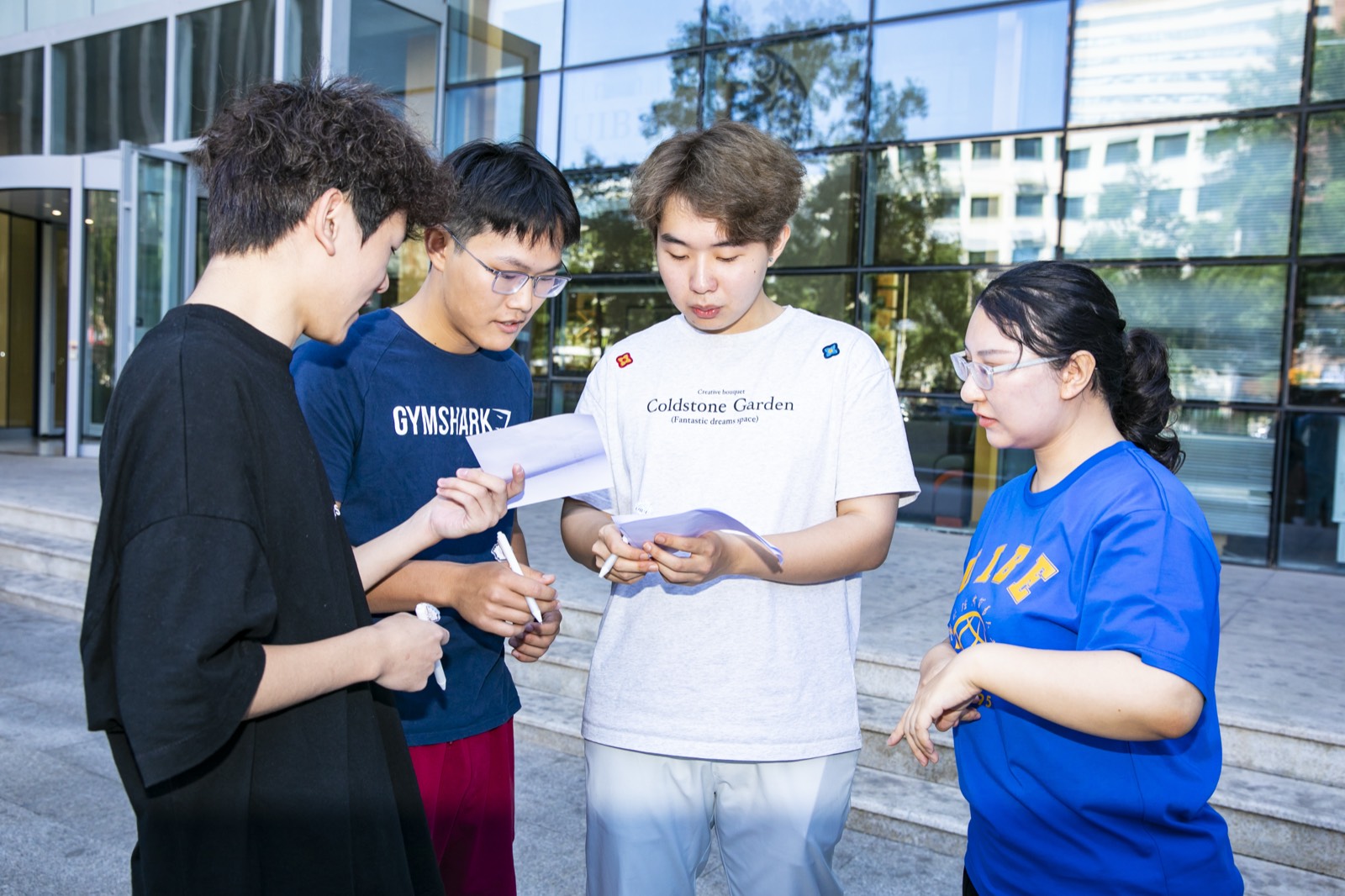
UIBE is a national key "Project 211" university directly under the Ministry of Education, located in Chaoyang District, Beijing. Known for its international focus, it hosts one of the largest international student cohorts in China. Students spend the two domestic years at UIBE's main campus, with full access via campus card to libraries, labs, and sports facilities — living alongside regular UIBE students and international students from 150+ countries.
Alexander College (Canada)
Overseas Partner

Alexander College (Canada)

Alexander College is a British Columbia–designated institution of higher education whose credits are recognized through B.C.'s official transfer system (BCCAT). AC maintains long-standing articulation agreements with UBC, U of Toronto, SFU, UVic, and other major Canadian universities. Campuses are located in Vancouver and Burnaby, and courses are delivered by AC faculty with curricula aligned with Canadian university standards.

Curriculum

Domestic-Phase Curriculum

The curriculum is built around three pillars: language competence, credit accumulation, and transfer readiness. All credit-bearing courses are taught in English by AC faculty, with content identical to AC's campuses in Canada.

CategoryCore Objective
English ProficiencyAcademic English and IELTS preparation, ensuring readiness for an all-English learning environment.
Academic FoundationsCalculus, economics, psychology, and other prerequisite courses required for transfer into target universities.
Transfer SkillsOverseas study methods, personal statement writing, and interview coaching — strengthening applications to competitive universities.

Program Highlights

Core Advantages

01

Streamlined 2+2 Pathway — No Second Transfer

Unlike programs requiring a second transfer through a community college, the two domestic years are recognized via B.C.'s official transfer framework, letting students articulate directly into the junior year at partner universities.

02

211-University Campus Immersion

Students study at UIBE's main campus with a campus card granting access to libraries, labs, and sports facilities — living alongside UIBE's regular students and 2,200+ international students from 150+ countries.

03

Taught in English by Overseas Faculty

AC faculty teach the domestic phase in English, with curricula aligned with Canadian university standards and supplemented by academic advisers in a dual-teacher arrangement.

04

Officially Recognized Transfer Pathway

Built on B.C.'s official transfer framework (BCCAT), with credits officially recognized. Historically around 95% of program students have transferred into B.C.'s top-3 universities (actual ratios vary by year).

05

More Accessible Fee Structure

By completing two years of credit coursework domestically, students meaningfully reduce overall cost. Domestic-phase tuition is approximately one-third of the equivalent phase overseas (subject to published rates each year).

06

Stable Bilateral Relations & Cutting-Edge Fields

Sino-Canadian educational cooperation remains stable, and Canada is internationally recognized in AI, chip design, and biotech — offering students meaningful options for advanced study and career direction.

Admissions

Eligibility & Admission Requirements

Target Students

Current and recent high school graduates; students who have completed the huikao after year 11; graduates of vocational / technical / associate-degree institutions; students currently enrolled in university.

Academic Requirement

High school GPA ≥ 70%; gaokao is not required. Applicants aged 19 or above may be exempted from high school transcripts.

Language Requirement

IELTS / TOEFL scores accepted; applicants without scores may be admitted via an official interview and enter the English intensive track post-admission.

Admission Paths

1

Language Score

Submit a qualifying IELTS or TOEFL score.

2

Official Interview

Applicants without language scores may be assessed through the program's official interview and enter the English intensive track after admission.

Progression

Overseas Articulation Universities

Credits articulate to all B.C. universities and partner institutions across Canada. Rankings refer to QS world rankings. Faculty options and admission are subject to the target university's current-year policy.

Canadian TOP Universities

7 universities

University of Toronto

Consistently top-ranked in Canada; "Harvard of the North"

QS #21

University of British Columbia

West-coast flagship; Sauder School of Business internationally recognized

QS #34

University of Alberta

Strong research profile; earth sciences and engineering among the world's leading programs

QS #111

University of Calgary

Notable strength in energy and engineering

QS #182

Simon Fraser University

Consistently ranked first among Canadian comprehensive universities in recent years

QS #318

University of Victoria

"Garden City" campus; highly regarded law and economics programs

QS #322

University of Waterloo

Renowned for computer science and the co-op paid internship program

Pathway Comparison

Direct Admission vs. 2+2 Pathway

DimensionDirect AdmissionThrough This Program
RiskAttrition in first-year direct admission is approximately 35%–45%Domestic-phase tutoring supports academic performance and reduces attrition risk
CostA year of tuition plus living expenses at top universities is approximately RMB 350,000–400,000College-level tuition leading to a top-university degree; saves approximately one to two years of overseas living expenses and about two-thirds of tuition overall
Application DifficultyHigh school GPA and English requirements are demanding; some universities also require huikao and gaokao scoresApplicants with a C-average and IELTS 5.0+ may apply; transfer into the partner university does not require high school or English scores
TransitionStudents must overcome psychological, cultural, and academic adjustment challengesA soft landing: early exposure to overseas teaching modes, platforms, and faculty communication styles

How to Apply

Application Process

1

Online Inquiry

Submit your details and preference; the admissions team will follow up within 24 hours

2

Document Review

Submit high school transcripts, identification, and language scores (if available)

3

Admissions Assessment

Admission via language score or official interview

4

Offer & Enrollment Registration

Upon offer, register simultaneously for overseas university enrollment

5

Domestic-Phase Matriculation

Complete payment per the offer and begin AC faculty–taught domestic coursework

6

Transfer Application to Junior Year

Complete transfer applications to target universities (UBC / U of Toronto / SFU, etc.) with program-team support

FeesDomestic-phase fee reference (subject to the official annual brochure): enrollment management fee RMB 100,000/year + program tuition RMB 96,000/year, totalling approximately RMB 196,000/year (roughly one-third of comparable Canadian tuition). Overseas-phase fees follow each target university's published international-student rates; housing, living expenses, and visa fees are additional.

Frequently Asked Questions

The two domestic years of credits are recognized through B.C.'s official transfer framework (BCCAT), allowing students to articulate directly into the junior year at Canadian partner universities without a second transfer through a community college.
Yes. Alexander College's credits are recognized through the B.C. Council on Admissions and Transfer (BCCAT), transferring into all B.C. universities and partner institutions across Canada.
AC faculty teach the domestic phase in English, supplemented by academic advisers who provide follow-up instruction and support.
Yes. Applicants without language scores may be admitted via an official interview and take the intensive English track to meet academic language requirements.
Yes. Gaokao is not required, and applicants aged 19 or above may be exempted from high school transcript requirements.
The program generally saves approximately one to two years of overseas living expenses and about two-thirds of bachelor's-program tuition (subject to the fees published each year).
Organized around three pillars — language competence, credit accumulation, and transfer readiness — covering English proficiency (academic English, IELTS), academic foundations (calculus, economics, psychology), and transfer skills (study methods, personal statements, interviews).
The program is recognized by UBC, U of Toronto, SFU, and other partners. Students meeting domestic-phase standards may apply for junior-year transfer, subject to each university's current-year requirements.
Graduates receive a bachelor's degree from the Canadian partner university and may apply to China's CSCSE for credential evaluation per the prevailing policy. Official CSCSE review determines the final outcome.
Consultations are held at UIBE's School of International Education (Room 104, Huibin Apartments). Classes take place at the UIBE main campus, 10 Huixin East Street, Chaoyang District, Beijing.
Canada offers the Post-Graduation Work Permit (PGWP) and multiple immigration pathways (CEC, PNP, etc.), subject to IRCC's prevailing policies. The program makes no guarantees regarding immigration outcomes.

Contact & Location

Program Office & Consultation

Consultation Office

UIBE School of International Education (Room 104, Huibin Apartments)

Teaching Location

UIBE main campus

Full Address

10 Huixin East Street, Chaoyang District, Beijing — UIBE

Ready to Take the Next Step?

Submit your application online and our admissions team will reach out within 24 hours. Appointments at the program office are also welcome.